
Expiration Date vs. Shelf Life: What’s the Difference?
Shelf life is a general term for how long a drug stays chemically stable and reasonably effective under proper storage. The expiration date is the specific date the manufacturer guarantees full potency and safety—beyond that, there’s no formal assurance, even if the drug may still work. (U.S. Food and Drug Administration)
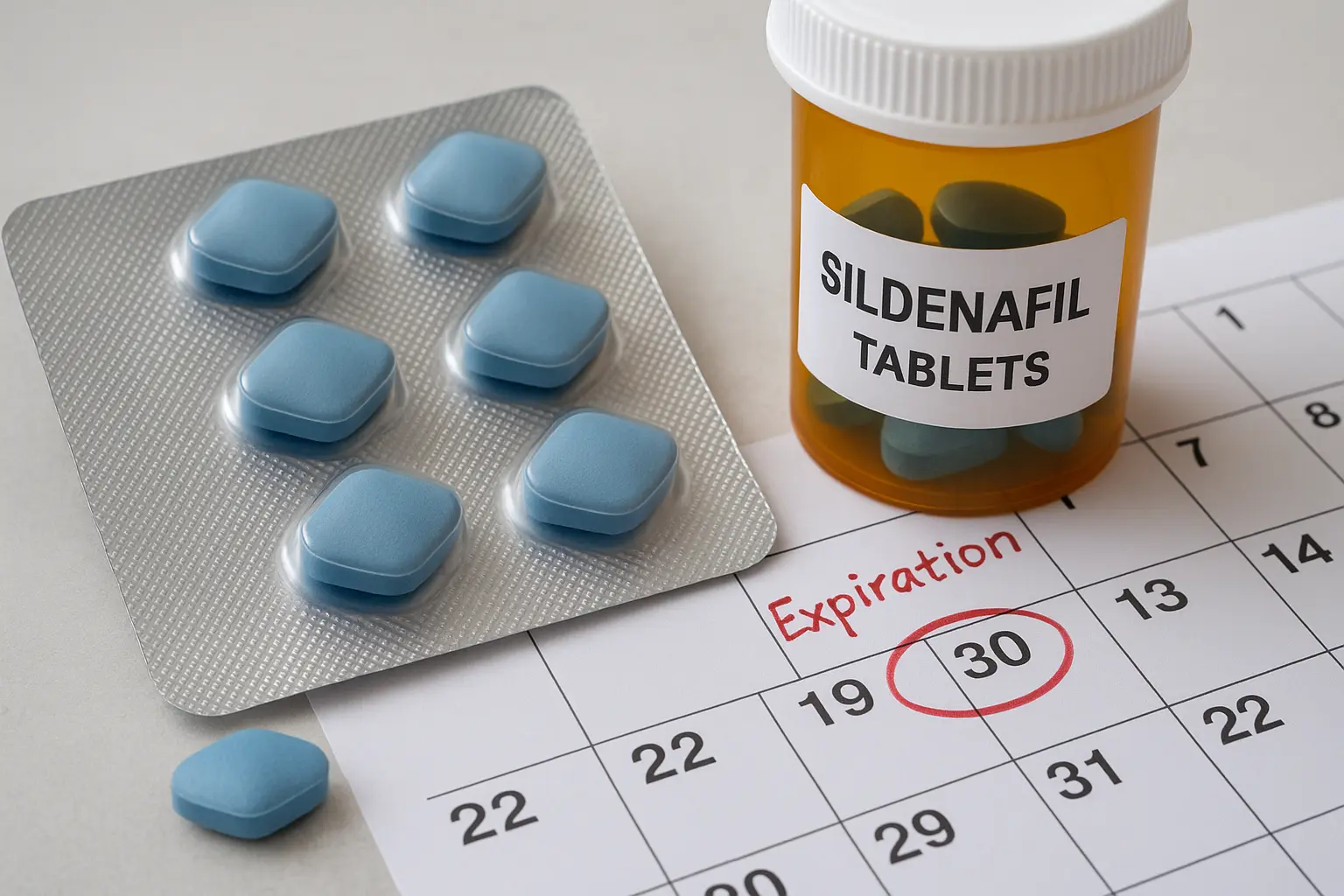
This distinction matters because studies, including large-scale reviews like the U.S. military’s shelf-life extension work, have found that many medications remain chemically stable and safe well beyond their labeled expiration if they’ve been stored correctly—sometimes years longer. (PMC) However, the expiration date reflects the point at which the drug maker stops guaranteeing that the active ingredient (sildenafil citrate, in this case) is at full labeled strength. Changes in chemical composition, and in rare cases degradation products, are why regulators advise caution past that date.
In plain language: expired sildenafil isn’t automatically “bad” or dangerous, but its reliability and effectiveness become uncertain, and neither the manufacturer nor most medical guidelines will vouch for it. (U.S. Food and Drug Administration, University Hospitals).