
Hexarelin vs Sermorelin: Benefits, Risks, Dosing, and How They Compare

Hexarelin and sermorelin both raise growth hormone, but via different receptors and with different response profiles. This guide contrasts mechanisms, practical dosing contexts, side-effect patterns, and pros/cons, with notes on investigational signals and the FDA’s determination regarding Geref (sermorelin).

Dr. Martin Smidt
Medically reviewed by:
Dr. Martin Smidt
Reading time: 10 Min
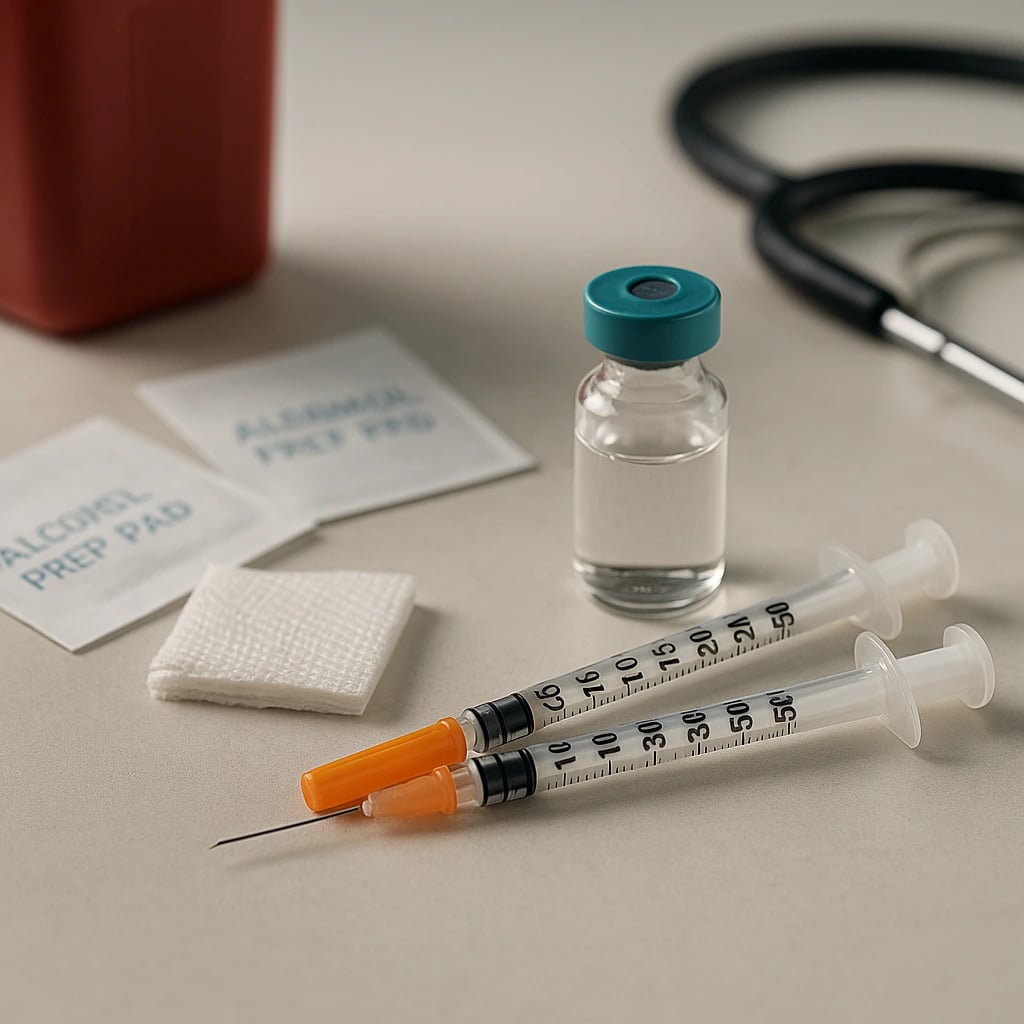
Photo of Hexarelin and Sermorelin injections

What Is Hexarelin?

Hexarelin is a synthetic growth hormone secretagogue (GHS)—a short peptide that binds the ghrelin (GHSR‑1a) receptor in the brain and pituitary to trigger pulsatile growth hormone (GH) release. In controlled human studies, single doses have provoked robust GH spikes in healthy adults, confirming on‑target activity (JCEM human study). Unlike administering GH itself, a secretagogue stimulates the body’s own axis, so GH still follows normal feedback and circadian rhythms rather than constant exposure.

Beyond endocrine effects, researchers have explored cardiovascular actions. Hexarelin engages receptors present in cardiac tissue and has shown myocardial‑protective and anti‑fibrotic signals in preclinical models—promising but investigational findings without approved clinical indications yet (see the overview cardiovascular review on PMC). Overall, hexarelin is best described as a potent ghrelin‑pathway modulator with documented GH release in people and early‑stage cardiac research.
What Is Sermorelin?

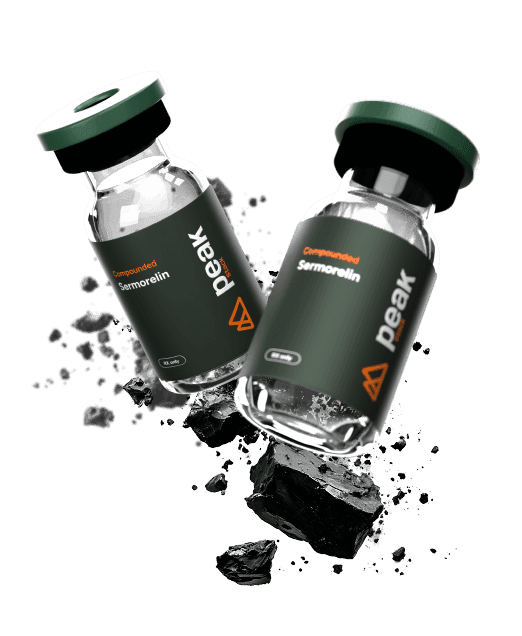
Sermorelin is a synthetic fragment of growth hormone–releasing hormone (GHRH 1–29) that binds the GHRH receptor on pituitary somatotrophs, triggering physiologic, pulsatile GH release via the classic Gs → cAMP/PKA pathway. For a concise mechanism explainer, see this NIH‑hosted review of GHRH receptor signaling, which illustrates how sermorelin amplifies the body’s own GH pulses rather than delivering hormone directly.

In the U.S., sermorelin was once sold as Geref for pediatric GH deficiency but the brand later left the market. The FDA subsequently clarified that the product was not withdrawn for reasons of safety or effectiveness—documented in the Federal Register’s determination for Geref (sermorelin) injection. Today, access typically comes through compounded preparations where permitted and overseen by licensed clinicians; this differs from the original, discontinued brand product and may vary by jurisdiction and clinical context.

Head-to-Head: Effectiveness & Use Cases

Both peptides raise growth hormone (GH), but they act at different receptors and produce different response profiles. Hexarelin is a ghrelin‑receptor (GHSR‑1a) agonist that can trigger strong, rapid GH bursts; sermorelin is a GHRH analog that amplifies physiologic, pulsatile GH release from the pituitary. Comparative overviews often characterize ghrelin mimetics as delivering a higher acute GH output per dose, whereas GHRH analogs are described as more physiologic in how they drive the axis—summarized in a broad review of GH secretagogues that also notes limited long‑term, rigorously controlled human data for non‑approved uses.

These mechanistic differences shape practical expectations. Hexarelin’s strong GH signal may coincide with co‑stimulation of other pituitary–adrenal outputs in some settings (e.g., ACTH and cortisol), as shown in controlled experiments where hexarelin elevated ACTH/cortisol alongside GH—JCEM human study. This is a reminder to weigh potency against endocrine selectivity in research contexts.

By contrast, sermorelin’s GHRH‑receptor pathway tends to reinforce the native pulse pattern and is historically linked to pediatric GH‑deficiency evaluation/treatment rather than short‑cycle performance goals. Across adult wellness or physique discussions, outcomes (changes in IGF‑1, body composition, sleep, or well‑being) vary with dosing strategy, timing versus circadian rhythm, baseline GH reserve, and study design. In short: hexarelin often delivers a sharper acute GH “punch” with broader pituitary signaling; sermorelin supports a more physiologic pattern with pathway selectivity—but results depend on protocol and individual endocrine context.

Dosing & Administration

Because these peptides work upstream of growth hormone, dosing is typically framed around stimulating physiologic pulses rather than delivering hormone directly—and must be overseen by a clinician. In approved use, sermorelin has been administered by subcutaneous injection, with consumer‑facing guidance on timing, prep, and precautions outlined in the Mayo Clinic monograph on the injection route. Protocols often align with the body’s natural nighttime GH rhythm, but exact regimens depend on indication, age, baseline GH reserve, and monitoring plans set by the prescriber.

By contrast, hexarelin has not been approved for routine clinical use; information comes mainly from controlled trials. In a double‑blind, rising‑dose human study in healthy volunteers, single intravenous boluses of 0.5, 1.0, and 2.0 µg/kg produced clear, dose‑related GH release—evidence for potency but not a self‑care template (PubMed trial summary). Other investigations have explored subcutaneous administration and diagnostic testing contexts, yet these remain research‑oriented, and long‑term real‑world dosing standards are not established.

Practical cautions: never self‑dose research peptides; use only prescribed, quality‑assured products with appropriate IGF‑1 and clinical monitoring. Injection training, aseptic technique, rotation of sites, drug–drug considerations, and periodic reassessment are part of medical supervision. For most readers, the key distinction is that sermorelin has a defined medical use case with clinician‑directed dosing, whereas hexarelin dosing in the literature reflects short, tightly controlled study protocols rather than approved therapy.

Safety Profile & Side Effects

Because both compounds stimulate your own GH axis, many reactions mirror GH‑related effects: injection‑site redness or itch, transient flushing, headache, lightheadedness, water retention/ankle swelling, joint stiffness, hand tingling/numbness, and sleep changes. These are usually dose‑ and context‑dependent and should be managed by a clinician who can track IGF‑1, edema, blood pressure, and fasting glucose/A1c.

Hexarelin‑specific considerations. As a ghrelin‑receptor agonist, hexarelin can trigger broader pituitary–adrenal signaling in some settings. Controlled human experiments reported co‑secretion of ACTH and cortisol together with GH—documented in a JCEM human study. Transient increases in prolactin have also been described in GHS studies; monitor if symptoms such as nipple sensitivity or libido changes occur.

Sermorelin‑specific considerations. As a GHRH analog with historical pediatric use, reported effects skew toward local reactions (pain, swelling, pruritus), flushing, dizziness, and altered taste or sleep, with systemic GH‑mediated effects possible if IGF‑1 rises. Consumer‑facing clinical guidance summarizes these reactions and standard precautions on use, timing, and monitoring in the Mayo Clinic monograph for the injection route.

Who should be cautious. Avoid or use only with specialist oversight if there is active malignancy, proliferative retinopathy, uncontrolled diabetes, untreated thyroid or adrenal disorders, severe sleep apnea, pregnancy/lactation, or a history of carpal tunnel. Glucocorticoids can blunt GH responses; thyroid status also modifies GH/IGF‑1 signaling. Bottom line: secretagogues require medical supervision, quality‑assured sourcing, and periodic reassessment of risks vs. goals.

Pros, Cons & Who Might Prefer Which

Hexarelin — Pros. As a ghrelin‑receptor agonist, hexarelin often delivers a stronger acute GH “pulse” per dose, which is why it’s frequently described as the more potent secretagogue in comparative overviews (see this broad review of GH secretagogues). Research interest also extends to cardiovascular biology, though those signals remain investigational and not established indications.

Hexarelin — Cons. Potency can come with broader pituitary–adrenal co‑stimulation (e.g., ACTH/cortisol) in some settings, and consumer‑level dosing standards do not exist. It is not FDA‑approved for routine therapy, so any use should remain under specialist oversight with lab monitoring (IGF‑1, glucose, edema, BP).

Sermorelin — Pros. As a GHRH analog, sermorelin amplifies physiologic GH pulses, aligning more closely with the body’s normal rhythm. It has a clear historical clinical context (pediatric GH deficiency), and clinician‑directed protocols, monitoring expectations, and patient education are easier to frame against established medical practice (again summarized in the secretagogue review).

Sermorelin — Cons. In adults with normal pituitary reserve, responses can be modest or variable; changes in IGF‑1 or body composition depend on dose, timing vs. circadian rhythm, and individual biology. Acute effects are typically less dramatic than ghrelin mimetics.

Who might prefer which. If a clinician prioritizes pathway selectivity and physiologic pulses, sermorelin may fit better. If the goal (under medical supervision) is a stronger acute GH signal for diagnostic or tightly controlled research contexts, hexarelin is often discussed. In all cases, weigh risk tolerance, monitoring capacity, and regulatory status before choosing a path.

Frequently Asked Questions

Which acts faster?

Ghrelin mimetics such as hexarelin often produce a sharper, more immediate GH spike after dosing. Sermorelin, a GHRH analog, tends to reinforce the body’s natural, pulsatile rhythm, so the rise can feel less dramatic but more physiologic.

Can they be combined?

Pharmacology studies show additive or synergistic GH release when a GHRH analog is paired with a GHS because they act on different receptors. Outside approved indications this remains experimental and should be done only under specialist supervision.

Is sermorelin FDA‑approved?

The original U.S. brand (Geref) was discontinued; the FDA later clarified it was not withdrawn for reasons of safety or effectiveness. Today, access typically occurs via compounding where permitted and when ordered by a licensed clinician.

How soon might effects be noticed?

GH can rise quickly after dosing in controlled settings. Any downstream changes in IGF‑1, sleep, recovery, or body composition—when they occur—depend on dose, timing versus circadian rhythm, baseline reserve, and consistent medical monitoring.