
Where to Inject Sermorelin (Safe Sites, Technique, and Rotation)

Not sure where to inject sermorelin? This guide covers safe subcutaneous sites (abdomen, thigh, upper arm), proper technique, rotation habits, and storage—backed by trusted medical sources.

Dr. Martin Smidt
Medically reviewed by:
Dr. Martin Smidt
Reading time: 10 Min
Sermorelin injection site

What Sermorelin Is and How It’s Given (Quick Primer)

Sermorelin is a synthetic analog of growth hormone–releasing hormone (GHRH) that signals the pituitary to release growth hormone. In outpatient care it’s typically given as a subcutaneous shot—i.e., into the fatty tissue, just under the skin—after a clinician teaches you dose prep, site selection, and safe technique. To protect skin and absorption, authoritative instructions advise you to use a different place on the body for each injection and even keep a record of the date and location so you don’t overuse any area. Follow clean technique, check your vial visually, and handle sharps properly per your training. Finally, always follow your prescriber’s exact dose and timing—adult protocols can vary—and contact your care team with any questions before changing how or when you take it.
Best Sermorelin Injection Sites (Subcutaneous)

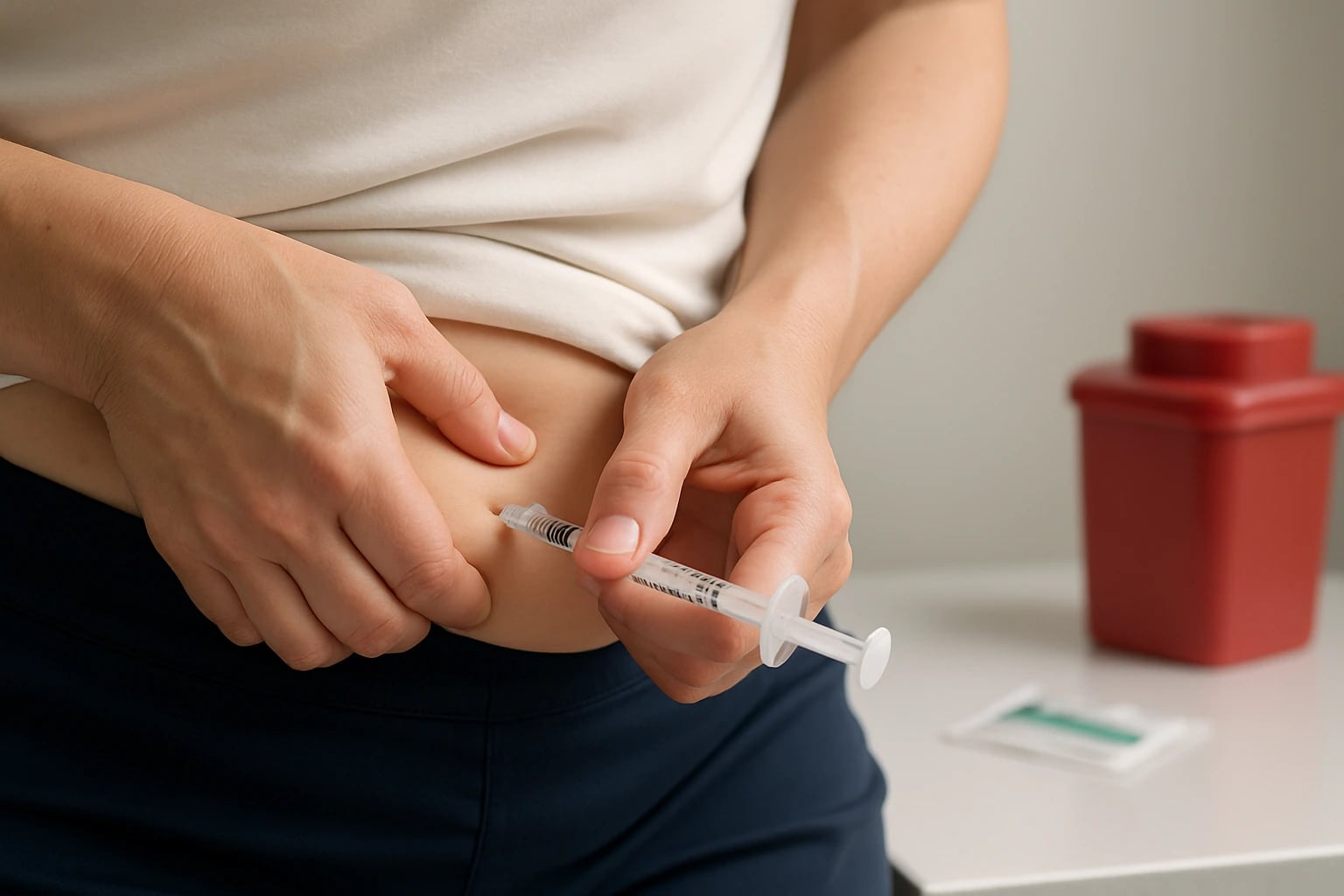
Your goal is to place the dose in the fatty layer under the skin—not into muscle. Authoritative self-injection guides list the abdomen, outer thigh, back of the upper arm, and buttocks/hip as appropriate SC areas. A Johns Hopkins patient guide explicitly calls out the abdomen, except the navel or waistline, along with the outer surface of the upper arm, the top of the thighs, and the buttocks. Use sites your clinician approved and rotate within them.

Abdomen (avoid a circle around the navel)

The abdomen is popular for comfort and control. Pick soft tissue below the ribs and above the hip bones and stay at least 2 inches (5 centimeters) away from your belly button to avoid sensitive tissue and scar rings. Choose a spot at least an inch away from your last injection.

Outer thigh (anterolateral area)

Use the top‑outer portion—not the inner thigh. It’s easy to see and pinch, which helps maintain the correct subcutaneous angle and depth.

Back of upper arm (triceps region; helper recommended)

This site usually requires a helper. Target the soft tissue over the triceps, not the deltoid muscle.

Upper outer buttock/hip

If you were trained to use this area, place shots in the upper‑outer quadrant (the fatty “hip” zone), not over the tailbone or sciatic path.

How to Inject Sermorelin Step by Step (Angle, Pinch, Pace, Dispose)

  1. Wash and set up. Clean your hands, clear a surface, and lay out supplies (alcohol swab, syringe/pen or syringe + vial, gauze, sharps container). Double-check your dose and expiration date before you start.

  2. Choose a healthy site. Pick a spot with normal skin—no redness, bruising, scars, or rashes—and rotate away from your last location by at least an inch.

  3. Pinch a fold of skin. Gently lift a 1–2 cm “tent” of subcutaneous tissue so the needle enters fat, not muscle.

  4. Angle matters. If you can easily pinch a fold, insert the needle at ~90°; if you’re lean or using a longer needle, use ~45°. Authoritative self-care pages describe this as “insert into the pinched skin at 90 degrees, or 45 degrees if there is not much fatty tissue,” which keeps the tip in the subcutaneous layer instead of muscle.

  5. Inject slowly and steadily. Depress the plunger at a relaxed pace, pause briefly, then withdraw at the same angle. You can lightly press with gauze for a few seconds if needed.

  6. Do not rub the site. Rubbing can increase irritation or bruising.

  7. Dispose safely. Place the used needle immediately into a proper sharps container; never recap or throw syringes in household trash.

  8. Record the site. Note the date and location so you don’t overuse one area, which helps minimize soreness and skin changes.

Rotation Strategy — A Simple 4-Day Map You Can Reuse

Rotating sites protects your skin and helps keep absorption steady. Use a simple loop you can stick with and log in your notes app or on the vial box: Day 1: Abdomen (left) → Day 2: Thigh (right) → Day 3: Abdomen (right) → Day 4: Thigh (left). Then repeat the loop. Stay about an inch from your last spot in that region, and avoid any skin that’s irritated, bruised, hardened, or scarred. The Mayo Clinic “Proper Use” section advises using a different place for each injection and keeping a record so you don’t overuse one area, while MedlinePlus’ subcutaneous self-care recommends changing your injection site and spacing shots at least 1 inch apart.

Storage & Handling (Reconstitution Basics, Refrigeration, Stability)

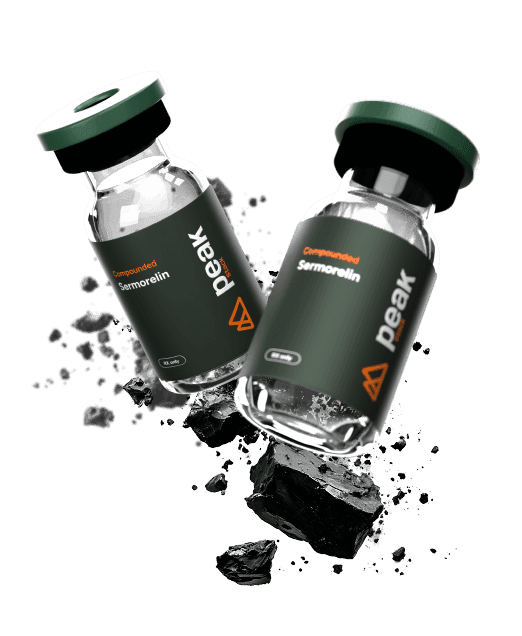
Mix exactly as directed by your prescriber/pharmacy (diluent type, volume, and final concentration), and swirl gently—don’t shake. Label the vial with the date/time of reconstitution and follow the pharmacy’s beyond-use date. Store reconstituted sermorelin in the refrigerator and do not freeze; discard any medication that looks cloudy, discolored, or contains particles. See Mayo’s “Proper Use” and “Storage” notes: Store in the refrigerator. Do not freeze for general guidance, and your pharmacy sheet for product‑specific limits. Many patient handouts also include dating rules (e.g., Belmar’s section titled Medication Dating and Storage). For travel, use an insulated pack with cold packs, and keep vials upright and protected from bumps.

Common Mistakes to Avoid

Common mistakes that cause soreness or absorption issues include: reusing the same spot, injecting into unhealthy skin (red, hardened, bruised, scarred), holding the needle too shallow or too deep, and rubbing the area afterward. Authoritative self-care guides say your injection site should be healthy—no redness, swelling, scarring, bruising and to rotate at least an inch. They also stress sharps safety—don’t recap; place used needles immediately in a sharps container—see the same MedlinePlus page for the step-by-step.

Safety, Side Effects, and When to Call a Clinician

Common local effects include mild pain, redness, or swelling where you injected. Hold the next dose and contact your prescriber if reactions are severe, unusual, or persistent. Get urgent care for allergy (hives, facial swelling, trouble breathing) or signs of infection at the site (worsening redness, warmth, pus, fever). The Mayo Clinic monograph lists local effects under “More common” and provides additional cautions and when to seek care; use those instructions alongside your clinician’s plan — see Mayo Clinic: Sermorelin—Side Effects.